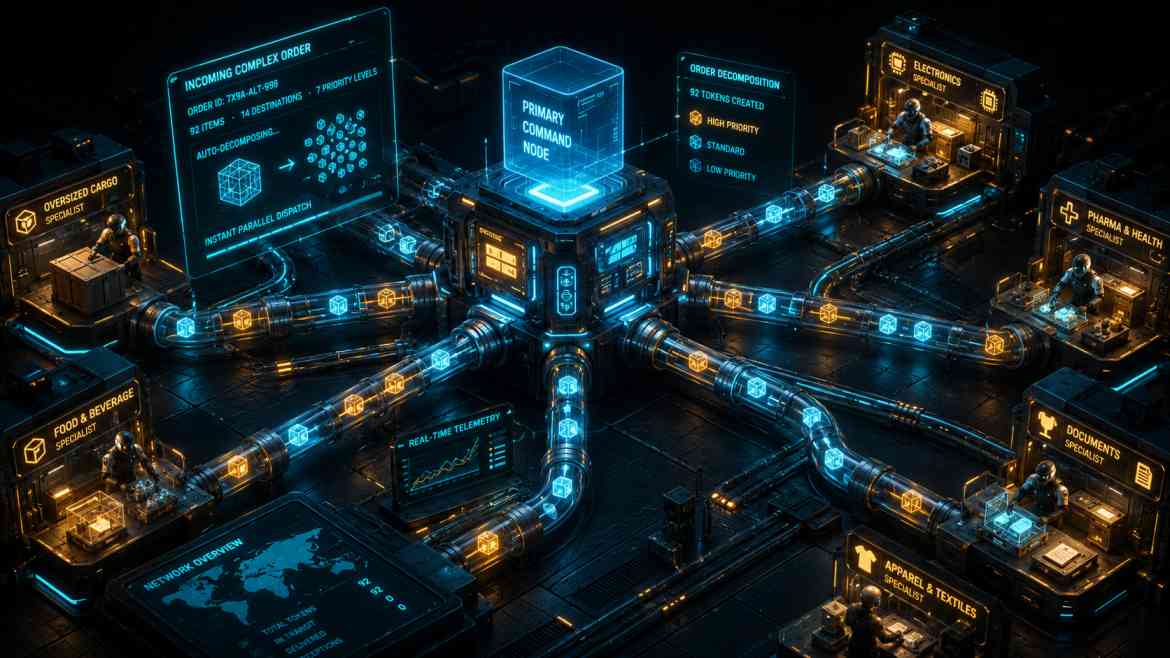
The Bloated Controller Antipattern
When you first scaffold a B2B SaaS platform at Smart Tech Devs, your application logic is straightforward. A client registers an account, and you save their credentials. But as enterprise features scale, your core code blocks become brittle. Suddenly, the user registration controller is doing ten things at once.
Your registration logic quickly turns into an architectural mess: saving the tenant user, initiating an enterprise subscription via Stripe, dispatching a Slack tracking telemetry update, generating default workspace boards, and queuing a verification email. If the Slack API experiences an outage, or the workspace setup throws a minor error, the entire user registration sequence breaks down and crashes. You have built a tightly coupled monolith where a single downstream failure takes down the core feature. To build durable SaaS infrastructure, you must implement Event-Driven Architecture.
The Solution: Events and Asynchronous Listeners
Event-driven architecture allows your core application logic to state: "An event occurred," and immediately return an HTTP response to the user. Specialized background listeners pick up that event and execute their independent workflows concurrently in the background. If one non-critical listener fails, the core system remains completely unaffected.
Step 1: Defining the Core Event Class
In Laravel, we create an explicit event class whose only job is to carry the minimum required data snapshot (the payload data model).
namespace App\Events;

use App\Models\User;
use Illuminate\Foundation\Events\Dispatchable;
use Illuminate\Queue\SerializesModels;

class TenantRegistered
{
    use Dispatchable, SerializesModels;

    // Public variable allows background listeners to inspect context data
    public User $user;

    public function __construct(User $user)
    {
        $this->user = $user;
    }
}
Step 2: Attaching Asynchronous Listeners
We create independent, asynchronous listeners that implement the ShouldQueue interface. This tells Laravel to automatically serialize the event and offload execution entirely to our Redis background workers.
namespace App\Listeners;

use App\Events\TenantRegistered;
use Illuminate\Contracts\Queue\ShouldQueue;
use App\Services\StripeBillingService;

// Implementing ShouldQueue guarantees non-blocking execution
class ProvisionBillingAccount implements ShouldQueue
{
    protected StripeBillingService $billing;

    public function __construct(StripeBillingService $billing)
    {
        $this->billing = $billing;
    }

    public function handle(TenantRegistered $event): void
    {
        // Communicate with Stripe API asynchronously in the background
        $this->billing->createCustomerAccount($event->user);
    }
}
Step 3: Registering and Dispatching the Event
We map our events and listeners inside the EventServiceProvider (or let Laravel discover them automatically), allowing our controller code to become completely lean and declarative.
// Inside your User Registration Controller
public function register(Request $request)
{
    $user = User::create($request->validated());

    // 1. Fire the event token and immediately continue execution
    TenantRegistered::dispatch($user);

    // 2. Return a 201 Success code to the client in under 15ms!
    return response()->json(['status' => 'success'], 201);
}
The Engineering ROI
By moving to an event-driven pattern, you decouple your business domains. Your core request controllers execute instantly because they no longer wait for third-party network APIs or heavy compilation tasks. Your system becomes deeply modular: adding a new feature (like logging analytics) simply requires creating a new background listener class, without touching or risking your tested, mission-critical registration controller code.