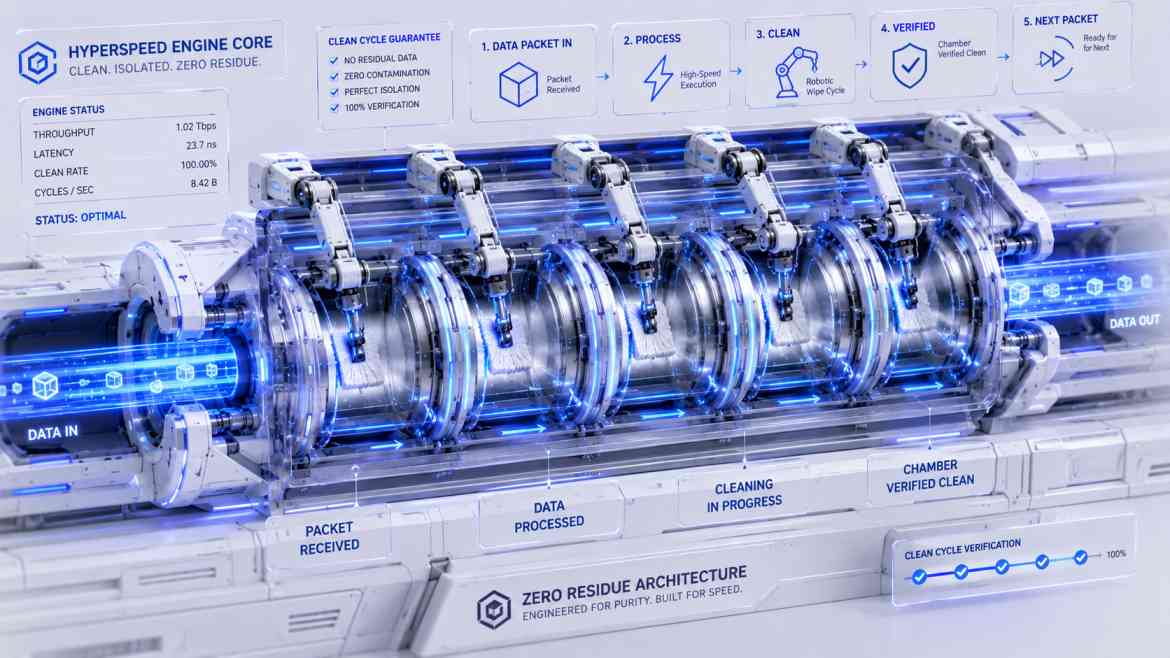
The Death of the PHP Request Lifecycle
For decades, PHP's greatest architectural advantage was its "share-nothing" architecture. A request comes in, the framework boots up, the database is queried, the response is sent, and then the entire PHP process dies. Every single variable, singleton, and memory allocation is wiped clean. It is incredibly safe, but booting the framework from scratch on every request is inherently slow.
To scale B2B SaaS platforms to thousands of requests per second at Smart Tech Devs, we use Laravel Octane (powered by Swoole or FrankenPHP). Octane boots the Laravel framework exactly once and keeps it alive in RAM, serving incoming requests instantly. It makes Laravel blazingly fast—but it destroys the "share-nothing" safety net. This introduces a terrifying vulnerability: State Leakage.
The Multi-Tenant State Leakage Trap
If the PHP process never dies, memory persists across requests. If you aren't careful, data from User A's request will leak into User B's request.
Imagine you have a custom TenantService registered as a Singleton in your Service Provider. In standard Laravel, this is perfectly fine. In Octane, it is a critical data breach.
// ❌ THE ANTI-PATTERN: Dangerous in Octane!
namespace App\Services;

class TenantService
{
    protected $currentTenant;

    public function setTenant($tenant)
    {
        $this->currentTenant = $tenant;
    }

    public function getTenant()
    {
        return $this->currentTenant;
    }
}
If User A hits your API, your middleware sets $currentTenant = 'Acme Corp'. A millisecond later, User B (who forgot their auth token) hits the API on the exact same PHP worker thread. Because the TenantService is a singleton that lived through the previous request, it still remembers 'Acme Corp'. User B just gained unauthorized access to User A's data.
The Enterprise Solution: Flushing State
To architect safely for Laravel Octane, you must explicitly flush stateful singletons or static variables after every single request. Laravel Octane provides a dedicated listener mechanism for this in the config/octane.php file.
Step 1: Architecting a Flushable Service
We add a flush() method to our service to wipe the slate clean.
// ✅ THE ENTERPRISE PATTERN
namespace App\Services;

class TenantService
{
    protected $currentTenant;

    public function setTenant($tenant) { $this->currentTenant = $tenant; }
    public function getTenant() { return $this->currentTenant; }

    // Add a reset method
    public function flush()
    {
        $this->currentTenant = null;
    }
}
Step 2: Registering the Flush Listener
Inside config/octane.php, we tell Octane to automatically call this flush method after every HTTP request finishes, preparing the worker safely for the next user.
// config/octane.php

'listeners' => [
    RequestTerminated::class => [
        // Flush the database query log, auth state, etc. (Built-in)
        FlushSessionState::class,
        FlushAuthenticationState::class,

        // Register our custom service to be wiped clean
        function ($event) {
            app(\App\Services\TenantService::class)->flush();
        },
    ],
],
The Engineering ROI
Migrating to Laravel Octane can drop your API response times from 150ms to 15ms. But speed without safety is a liability. By ruthlessly auditing your singletons, static properties, and global state, and utilizing Octane's flush listeners, you combine the blazing speed of Node/Go with the elegant developer experience of Laravel, building a SaaS capable of massive, secure scale.