The Polling Problem
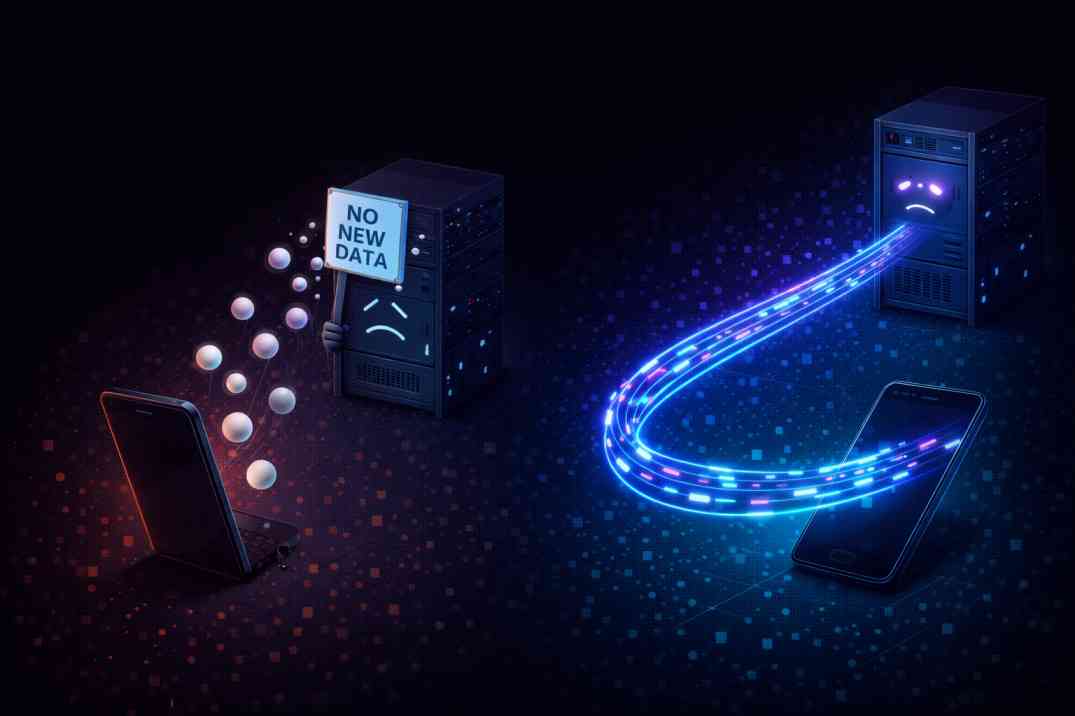
When developers need to build a real-time feature—like a chat system, live notifications, or a live order tracker—they often default to the easiest solution: HTTP Polling. They write a timer in their Flutter app that pings the Laravel API every 5 seconds: "Any new messages? No. Any new messages? No."
This is a catastrophic architectural decision for a mobile application. Polling destroys the user's battery life, consumes massive amounts of cellular data, and spams your server with thousands of useless requests. If you have 1,000 active users polling every 5 seconds, your server is handling 12,000 requests a minute just to say "nothing changed."
The Event-Driven Shift
To build a true real-time application, you have to abandon the traditional Request-Response cycle and adopt an Event-Driven Architecture using WebSockets.
With WebSockets, the Flutter app connects to the server once and keeps the pipe open. The app never asks for data. Instead, it just listens. When an event occurs on the server, the server instantly pushes the data down the pipe to the client.
Architecting with Laravel Reverb & Flutter
Historically, setting up WebSockets was an infrastructure nightmare requiring external paid services like Pusher. Today, we architect this internally using Laravel Reverb (or standard Laravel WebSockets).
In Laravel, we isolate the logic into an Event class that implements the ShouldBroadcast interface:
class OrderStatusUpdated implements ShouldBroadcast
{
    public $order;

    public function __construct(Order $order)
    {
        $this->order = $order;
    }

    // Broadcast only to the specific user's private channel
    public function broadcastOn()
    {
        return new PrivateChannel('user.' . $this->order->user_id);
    }
}
When the order status changes, we dispatch the event. The Laravel backend immediately pushes it over the WebSocket server.
On the Flutter side, we use Laravel Echo to listen to that private channel. The UI reacts instantly, with zero polling required:
echo.private('user.${userId}')
    .listen('OrderStatusUpdated', (event) {
        // Instantly update the Riverpod state and trigger a UI animation
        ref.read(orderProvider.notifier).updateStatus(event['order']);
    });
Conclusion
WebSockets are no longer just for chat apps. By shifting to an event-driven architecture, you drastically reduce server load while providing a magical, hyper-responsive experience for your mobile users. Stop asking the server for updates; let the server tell you when it's ready.